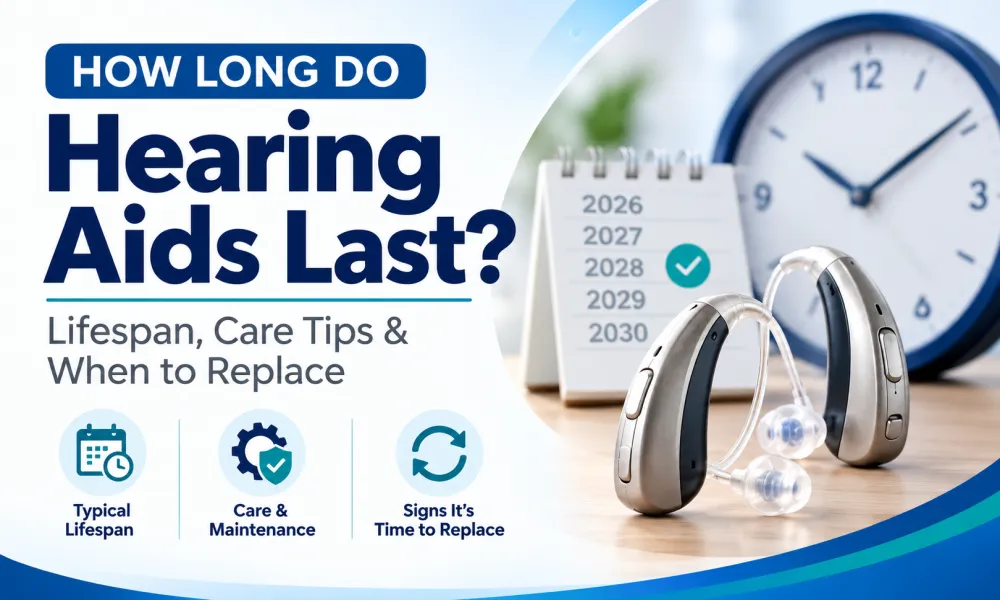
A modern hearing aid does far more than just boost volume or improve sound clarity. It keeps you connected to your workplace, family gatherings, and everyday conversations. However, it eventually wears out like any other device used daily. While most hearing devices perform reliably for years with proper care – their actual lifespan depends on daily maintenance and environmental factors. Recognizing what impacts their durability and identifying early warning signs of hardware failure is crucial to keeping your communication seamless. Maybe conversations don’t sound as clear as before. Or the battery doesn’t last the day any more. So you might wonder how long hearing aids actually last.
Hearing Aids Lifespan
This guide explains everything about their longevity and simple habits that can help you get the most from your investment.
-
Average Lifespan of Hearing Aids
The average lifespan is between three and seven years. Some hearing aids continue working beyond that with proper care – while others may need early replacement due to heavy daily use or changing hearing needs.
Here’s what affects their lifespan.
- Device quality matters
Premium quality hearing aids often use durable components. Additionally, the advanced technology installed promises reliable service for a much longer time.
- Daily usage makes a difference
Wearing them all day causes more wear than occasional use.
- Regular care extends their life
If you want excellent sound clarity, then regular cleaning and expert servicing are necessary. This step prevents small issues from turning into costly repairs.
-
What Affects the Lifespan of Hearing Aids
Everyday habits play a bigger role in affecting their longevity. If ignored, even small issues can gradually reduce the performance of your hearing aids.
Some of the biggest reasons include:
- Daily wear and tear
Constant use naturally causes wear and tear on tiny electronic parts.
- Moisture and sweat
Humidity and perspiration can slowly affect internal components over time.
- Earwax buildup
Did you know that wax buildup may block microphones and speakers? This reduces their sound clarity.
- Cleaning routine
Regular cleaning removes any dirt and debris – which prevents further long-term damage.
-
Signs It’s Time to Replace Them
In most cases a repair can fix the minor issues. Other times, replacing the device is the smarter choice. If you notice any of these signs – act quickly before the performance drops further.
- Sound feels weaker or distorted.
- Repairs are becoming more frequent.
- The battery drains much faster than before.
- Your hearing has changed – even after adjustments.
- The device no longer supports your listening needs.
A quick hearing evaluation is often the simplest way to see if your device just needs a minor fix or if it is time for an upgrade.
-
How to Make Your Hearing Aid Last Longer
Routine care requires minimal effort – but can significantly extend the life of your device.
Follow these quick and easy habits:
- Clean them every day with the recommended hearing aid cleaning tools.
- Keep them inside a hearing aid drying case to remove moisture.
- Remove the device before showering or swimming.
- Schedule regular audiologist appointments for professional cleaning. They also help with performance checks and programming updates.
Final Words
Hearing aids can last anywhere between three and seven years with proper care. If you notice declining sound quality, frequent repairs, or changes in your hearing – book a hearing evaluation with the Shai Clinic. Timely servicing or upgrading can help you continue hearing comfortably and confidently every day.
Frequently Asked Questions (FAQs)
How frequently do hearing aids require servicing?
Shai Clinic recommends a professional check-up every six to twelve months. Regular servicing keeps your hearing aids clean and running smoothly.
Can sweat damage hearing aids?
Yes. Excess moisture from sweat or humidity can damage internal parts over time. Cleaning and drying your device after each use protects it from harm.
What to do if my hearing changes?
In this case, your audiologist will help adjust your hearing aid as per your requirements. If they no longer meet your hearing needs – replacing them may provide better results.
Is repairing a hearing aid better than replacing it?
It depends on certain factors:
- Device age
- Repair cost and condition
If repairs become frequent or the hearing aid is over five years old – replacing it is often the best idea.
Is regular cleaning of hearing aids necessary?
Yes. Regular professional servicing helps maintain performance and extends their longevity.