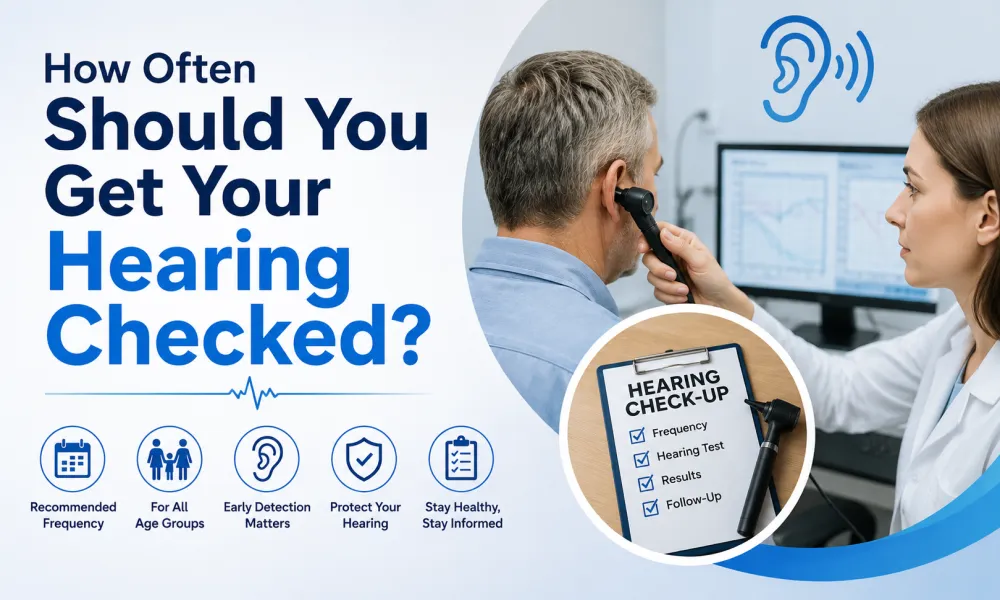
People rarely skip vision or dental checkups, but hearing is often forgotten. And that’s how hearing loss can go unnoticed for years. It may start with missing a few words during conversations or turning up the TV volume. Since hearing loss develops gradually – these early changes are easy to miss. A routine hearing test catches those tiny shifts before they impact your daily routine. Whether you work in a noisy environment, use earbuds daily, or just want to stay on top of your health – seeing an audiologist periodically keeps your hearing sharp for years to come.
Why Regular Hearing Evaluation Matters
Hearing impacts your relationships, balance and cognitive health. Don’t let untreated hearing loss drain your confidence – routine checkups help catch these changes early so you can get the right care.
Regular hearing evaluation can help you:
- Detect minor hearing changes before they become visible in daily life.
- Identify issues linked to loud noise, aging, medicines, or infections.
- Create a hearing baseline – making future changes easier to monitor.
- Get timely advice from an expertwhen it matters most.
A hearing test doesn’t just measure what you can hear. It helps protect your overall quality of life.
When Should You Book Your Hearing Assessment?
The truth is, there isn’t a one-size-fits-all schedule that works for everyone. Your age, personal health background, and how much noise you deal with at work – all shape how often you need a checkup.
General recommendation as per your age:
- 18 to 40 years
Every three to five years if your hearing health is in perfect condition and there are no symptoms.
- 40 to 60 years
After every two to three years. During this phase, age-related changes may begin gradually.
- Over 60 years
Once every year to detect any hearing changes as early as possible.
- High-risk individuals
Annual or more frequent testing as advised by Sahi Clinic Audiologist.
Even if your hearing feels absolutely normal – routine screenings can reveal subtle changes long before they become obvious.
How to Know It’s Time for a Hearing Test
Small hearing changes often get ignored as simple fatigue or background noise. Spotting these changes can help you seek proper care on time.
Consider booking a hearing assessment if you:
- Frequently ask people to repeat themselves.
- Increase the TV or phone volume more than others.
- Find conversations difficult in busy restaurants or public places.
- Notice ringing, buzzing or humming in your ears.
- Feel that people are speaking less clearly than before.
- Experience sudden hearing changes in one or both ears.
If these symptoms continue for more than a few days – don’t delay a professional evaluation.
Who Should Get Their Hearing Tested More Often?
Your work, daily habits, and overall health – all these can increase your risk of hearing loss. Regular monitoringhelps prevent small issues from becoming permanent.
Frequent hearing checks are recommended if you:
- Work in construction, factories, aviation or other noisy industries.
- Listen to loud music through headphones.
- Have diabetes, high blood pressure, or heart disease.
- Have a family history of hearing loss.
If you are in any of these groups – yearly hearing tests are a smart habit that you should adopt.
Daily Habits to Protect Your Hearing
The best approach? Combine routine hearing tests with healthy habits. Small daily choices today go a long way in preserving your hearing tomorrow.
- Wearing hearing protection in loud workplaces or during DIY projects.
- Keeping your headphone volume at or below 60%.
- Taking breaks after prolonged noise exposure.
- Not putting cotton swabs inside the ear canal.
- Treating ear infections promptly.
- Includinghearing checks as part of your routine preventive healthcare.
Healthy hearing isn’t just about avoiding loud sounds – it’s about making consistent choices daily.
Final Words
Your hearing matters every day. Small changes can be easy to miss. A hearing test gives you peace of mind and helps detect problems early. Book your hearing check with Shai Clinic today and take the first step toward better hearing and a better quality of life.
Frequently Asked Questions (FAQs)
How often should adults get a hearing test?
A hearing test every 3 to 5 years works just fine. However, anyone over 60 or anyone frequently exposed to loud noise should get checked annually.
Are hearing tests accurate?
Yes. Audiologists use clinical-grade equipment to test different frequencies and sound levels – giving you a very clear picture of your overall hearing health.
Can children suffer from hearing loss?
Definitely. Exposure to loud music, certain medications or any underlying medical conditions can cause hearing loss in children.
Is hearing loss avoidable?
No. You can lower the risk to a certain extent. Wearing earplugs around loud sounds and getting regular checks will protect you over the long run.
Should I get tested if my hearing feels fine?
Yes. Hearing loss usually appears so slowly that you might not notice until it gets worse. Routine checks help catch those subtle shifts early.