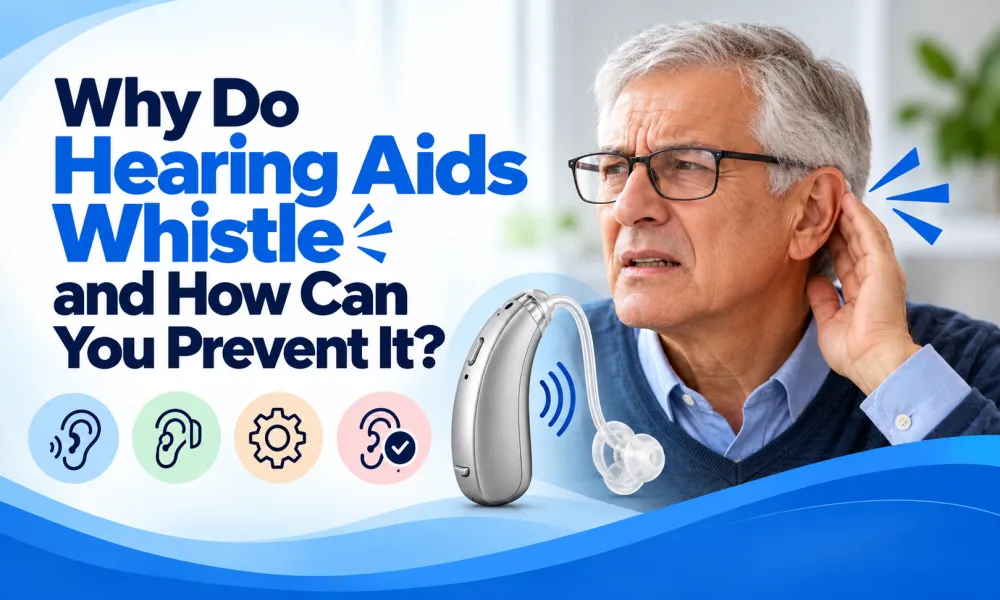
You put your hearing aids on, start talking to someone and suddenly you hear a sharp whistling or squealing sound. From adjusting the volume and pushing the hearing aid back in again to taking it out and putting it back – you did everything, but the sound keeps coming back. Does this sound familiar? Well, it’s your hearing aid giving feedback.
A little feedback can happen occasionally – especially when you are putting your hearing aids in or taking them out. Notice if your hearing aids whistle often during normal activities. If yes, you must get them checked by an audiologist in Sugar Land. The reason could be as simple as a poor fit, a blocked component or something serious that requires professional adjustment. The good news is that it’s usually fixable. Let’s look at why this happens and what you can do about it.
What Causes a Hearing Aid to Whistle
A hearing aid picks up sound through its microphone, processes it and sends amplified sound into your ear. Now imagine some of that amplified sound slips out of your ear and gets picked up by the microphone again. The device can amplify it repeatedly resulting in that high-pitched whistle. This is called feedback. Luckily, modern hearing aids can include feedback-cancellation technology to reduce whistling and buzzing.
However, have you ever wondered why this sound escapes in the first place? There are several possibilities.
-
The Hearing Aid Does Not Fit Properly
Your hearing aid should have that perfect fit in or around your ear. If it has shifted, is too loose or the earmold or earpiece does not seal as it should – amplified sound can leak out.
This is one reason you may notice whistling when you move your jaw. Other than that, chewing, talking, or touching the hearing aid can also bring up this issue.
If your hearing aids don’t sit quite right – no need to panic. A small fit adjustment or a bit of reprogramming can often work wonders.
-
Earwax is Blocking the Ear
Sometimes, earwax can cause hearing aids to whistle. If wax builds up in the ear canal or around parts of the hearing aid – the sound may not reach your inner ear as intended. When sound can’t travel deeper into the ear, it bounces back out and straight into the microphone. Most people ignore earwax buildup until their hearing aids start squealing.Keep your device clean to stay away from this hassle.
-
Your Hearing Aid Has Shifted
You slide your hearing aid in, and everything sounds fine.As you push your glasses upor chat for a few minutes, that sharp whistle sound comes up.
Yes, a slight movement can change the way the device sits in your ear. Even a small change in positioncan affect the seal and allow amplified sound to leak back toward the microphone.
Simply remove the hearing aid and carefully put it back in its normal position. If the whistling keeps happening, do not keep pushing it deeper into your ear. Take it to an audiologist in Sugar Land for a fit check.
-
The Volume or Amplification Needs Adjustment
More amplification is not always better. If the aid amplifies more than your ear and fit can manage – the extra sound escapes and loops right back in. Hearing aids are programmed according to your hearing needs, and they may need fine-tuning as your hearing or listening needs change.
Your hearing aids are set up to match your hearing and shaped to fit your ear. The goal is simple- clear sound, a comfortable feel, and a secure hold. Fine-tuning may also be needed after you start using them in everyday situations.
How Can You Prevent Hearing Aid Feedback
Following some simple habits can actually prevent hearing aid feedback.
- Insert your hearing aids correctly.
- Must keep your hearing aids clean.
- Do not ignore it if whistling keeps repeating.
- Avoid putting cotton swabs or other objects deep into your ear.
- Give your hearing aid a quick check after putting it on.
When Should You See an Audiologist
A professional check becomes compulsory if your hearing aids won’t stop whistling despite being positioned correctly.
An audiologist in Sugar Land can check whether the device fits properly. Other than that, they can check for possible earwax buildup and confirm whether the hearing aid settings need adjustment. A fit check is not about placing a device in the ear. Physical fit, comfort, security and the absence of feedback – all are part of proper fitting.
Besides, getting professional assistance is a good idea if whistling appears all of a sudden followed by ear pain, drainage, dizziness, sudden hearing changes or rapidly worsening hearing. These symptoms will only improve with medical evaluation rather than simply hearing aid adjustment.
Final Words
A whistling hearing aid is annoying and sometimes embarrassing. But that doesn’t mean you have to live with it. Most of the time the cause is simple – a wax buildup, a loose fit or a worn part. If you feel the problem is serious, just book a visit to Shai Clinic today!