
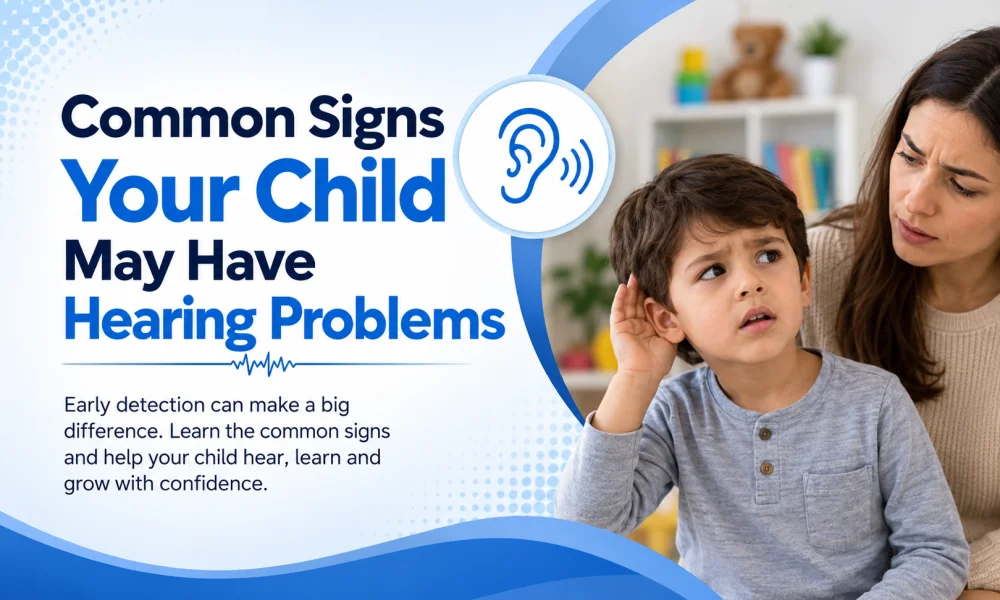
Hearing is a crucial part of a child’s speech, language development, learning and social interaction. Sometimes hearing loss can occur over time and it is easily missed. Awareness of the early signs may assist parents to make a timely visit – to a professional hearing evaluation clinic.
If you notice your child has any of the following – it could mean he or she has a hearing issue.
-
Delayed Speech and Language Development
Children learn to speak by hearing and imitating the sounds around them. Difficulty hearing may be one potential cause – if your child’s speech and language development is not on track. A hearing assessment may be warranted if the child has – limited vocabulary, unclear speech or slow responses.
-
Not Responding When Called by Name
Does your child often ignore your voice and appear to be listening when they don’t? This may occur due to concentration but persistent lack of response – can be a result of a hearing impairment with certain sounds or voices.
-
Frequently Saying “Huh?” or “What?”
If someone constantly repeats himself or herself – it may be the first clue to hearing loss. If your child frequently says “huh?” or “what?” off a regular basis – especially in normal conversation with the person speaking close by – have their hearing assessed.
-
Turning Up the TV or Device Volume
If your child regularly turns up the volume on the television, tablet, computer or headphones to an unusually high volume – they may be having difficulty hearing properly. If it occurs even when other family members are comfortable with the volume – be sure to pay attention.
-
Difficulty Following Verbal Instructions
Children with hearing loss may have trouble understanding verbal commands – especially directions that have more than one step. They may seem off-topic or often repeat your words. This may sometimes be confused with inattention – when it could be that the child is having trouble hearing.
-
Speaking More Loudly Than Expected
Children tend to normalize their speech volume – according to their setting. If your child consistently speaks a lot louder than is needed, particularly in quiet settings – that may mean they lack good self-awareness of their own speech.
-
Trouble Understanding Speech in Noisy Places
Background noise is a problem for everyone, but for children who have hearing problems – it can be especially difficult to hear what’s being said in restaurants, classrooms, playgrounds or family gatherings. Be alert to times when your child often misinterprets conversations – when there is background noise.
-
Watching People’s Faces or Lips Closely While They Speak
A child who has a hearing loss may use visual cues – when listening to a conversation. If your child’s repeated habit of watching a speaker’s face or lips – is a way of trying to make up for missing sounds using visual cues.
-
Frequently Mispronouncing or Misunderstanding Words
Children with hearing loss may miss or have trouble remembering a variety of speech sounds. Sometimes, hearing may be affected by persistent mispronunciation, confusion between similar-sounding words or difficulty understanding certain words.
-
Complaining of Ear Pain, Pressure, or Hearing Sounds Differently
Don’t dismiss ear pain, pressure, a blocked-up feeling, ringing – or sounds that are muffled or changed. Ear infections, fluid build-up and other ear-related conditions may have a temporary or permanent impact on hearing. Further evaluation may be necessary and a healthcare professional will be able to tell.
When Should Parents Consider a Hearing Test?
If parents notice a combination of these signs and their child’s hearing, speech or communication is changing – they should have their child professionally evaluated. Difficulty with hearing can impact classroom involvement, language development, self-confidence and interactions with others.
A hearing evaluation can determine if this hearing loss is temporary – caused by a condition of the ear or caused by a more chronic hearing loss. Early identification also provides parents and professionals time to identify appropriate supports.
Why Early Hearing Checks Matter?
Hearing screening early can assist parents in determining – if the child’s communication problems are due to hearing loss or other factors. Sometimes a child may not be aware of missing sounds – so he/she may respond by bringing his/her face close to the speaker, speaking louder or using visual cues. Early recognition of a hearing concern may help to facilitate – improved speech, language, learning, and social development. It is important for parentsto also keep in mind – that a hearing loss can occur at any age and it may be temporary – if they have an ear infection or fluid in their ear. An evaluation by a professional can help clarify and identify the next steps – if unusual hearing behaviours persist.
Final Words
Early signs of hearing difficulties will make a difference in a child’s communication and development. These are worth checking – delay in speaking, frequent requests for repeated speaking, loud voice, trouble understanding speech when people say things slowly, trouble understanding speech when there is a lot of background noise. If there are ongoing concerns – then it is a good idea to make an appointment with an expert hearing examiner to get a professional opinion. An experienced Audiologist in Houston can provide assistance – in determining if your child has a hearing concern and what support may be appropriate.