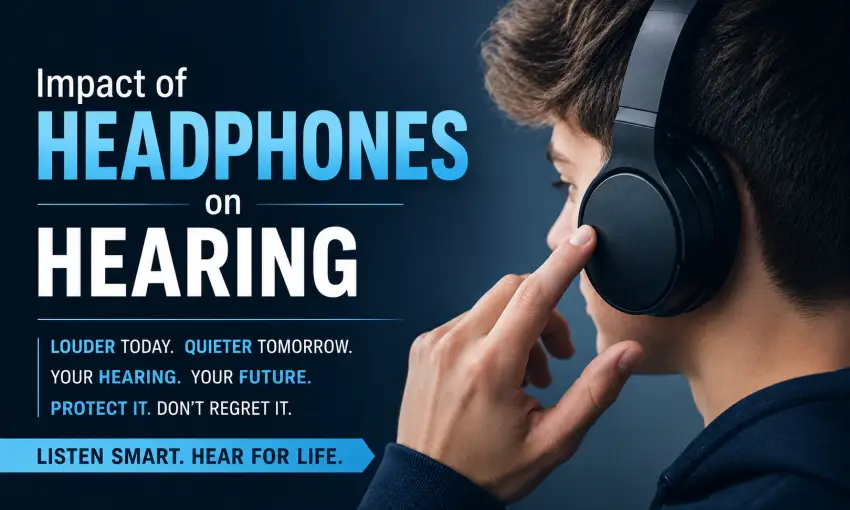
Headphones are a part of everyday life now. Music, calls, workouts, even work meetings – everything flows straight into our ears. Is it convenient? Yes, absolutely. Risk-free? Not always.
The truth is simple: headphones themselves aren’t the problem. How you use them is. Keep reading to understand the impact of headphones on hearing – and the steps that can help protect it.
How Headphones Affect Your Hearing
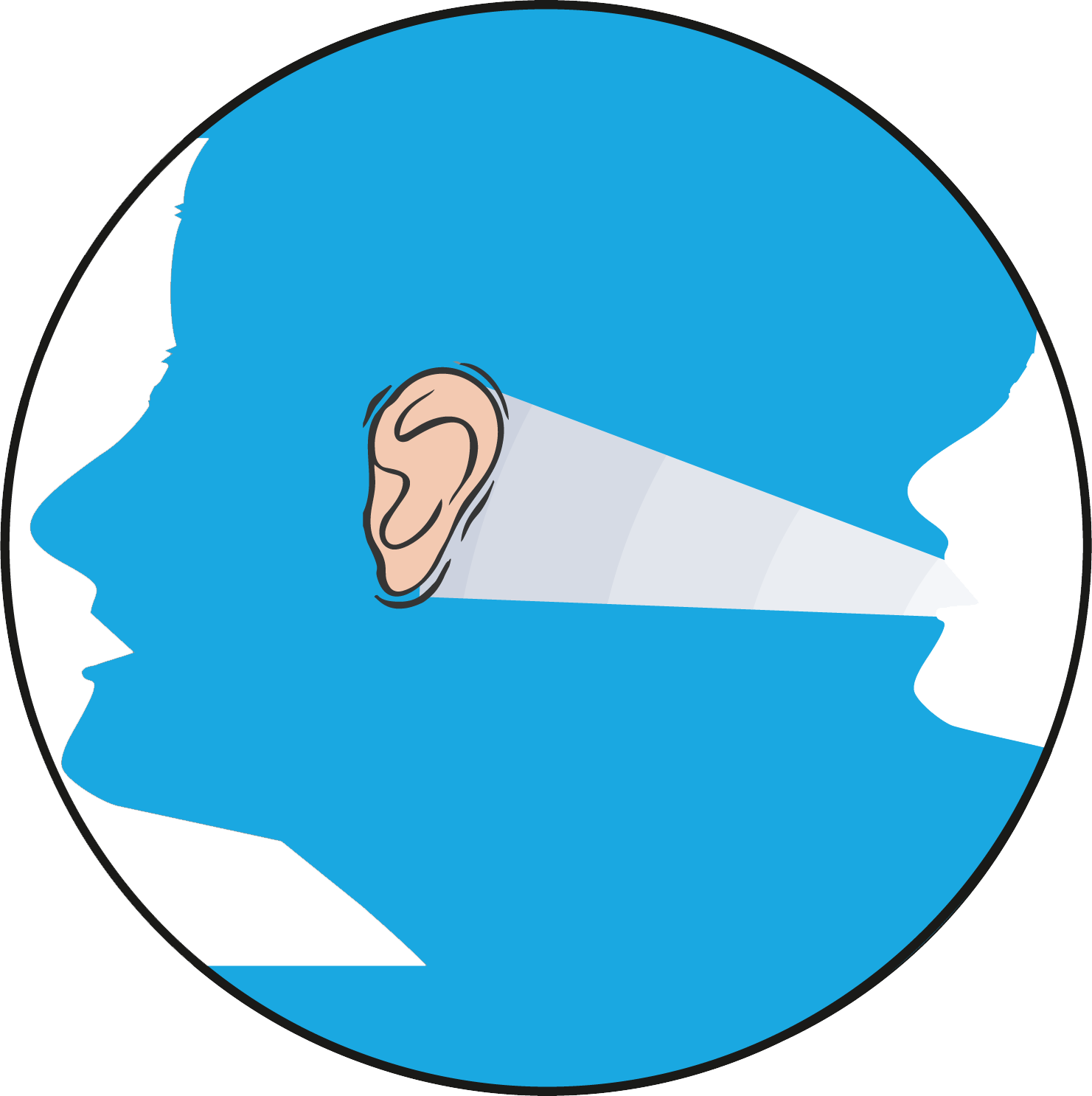
Sound waves travel directly into your ear canal when you use headphones. There’s no space for them to disperse as they do with speakers. This close proximity makes a big difference.
With speakers:
- Sounds spread out in the environment.
- Intensity reduces before reaching your ears.
With headphones:
- Sound goes straight into the ear.
- Higher concentration of sound energy strikes the ear drum.
This direct delivery increases the risk of damage – especially with frequent or prolonged use. Over time, exposure to loud sounds can affect the tiny hair cells in your inner ear. Once damaged, they don’t regenerate.
That’s where long-term hearing issues begin.
The Risk of Listening at High-Volume
Loud volume is one of the biggest risks to your hearing health. Sounds above 85 dB can cause gradual damage, yet most people don’t realize how loud they’re listening.
Common habits include:
- Increasing volume in noisy environments.
- Using max volume during workouts or travel.
- Ignoring early discomfort.
Even short bursts of very loud sound can be harmful. When someone next to you can hear what you’re playing, your volume has crossed a safe limit.
Listening Duration Matters
It’s not just about how loud. It’s also about how long.
This is where long-term sound exposure comes in.
- Moderate volume + long duration = risk.
- High volume + short duration = risk.
- High volume + long duration = highest risk.
Continuous listening puts strain on your ears. They don’t get time to recover.
Even at “comfortable” levels, listening for hours without breaks can slowly affect your hearing. It’s subtle, gradual; and easy to ignore.
Early Warning Signs of Hearing Damage
Your ears usually give warning signals before serious damage sets in. You just need to notice them.
Check for:
- Ringing in the ears (tinnitus).
- Muffled hearing after using headphones.
- Difficulty understanding speech, especially in noise.
- A feeling of temporary hearing dullness.
These signs often go away at first. That’s why many people ignore them.
But repeated episodes can turn temporary issues into permanent ones.
Safe Listening Rule
A simple rule can make a big difference – the 60/60 rule.
- Avoid listening beyond 60% volume.
- Limit usage to 60 minutes.
- Take a break before continuing.
It’s easy to remember. Even easier to follow.
Simple habits – like turning the volume down a bit or taking short breaks between sessions – can preserve your hearing in the long run.
Choosing the Correct Headphones
Not all headphones are equal. Your choice matters more than you might think.
Over-ear headphones
- Cover the entire ear.
- Better at blocking external noise.
- Often safer at lower volumes.
Earbuds (in-ear headphones)
- Sit inside the ear canal.
- More direct sound delivery.
- Higher risk if used at loud volumes.
Noise-cancelling headphones
- Reduce background noise.
- Allow you to listen at lower volumes.
- A safer option in noisy environments.
Also, never ignore comfort and fit. Poorly fitting headphones can make you increase the volume unnecessarily.
When to Get Your Hearing Checked
If you feel that something about your hearing health isn’t right, get your hearing test done by an audiologist. Don’t wait for too long if you notice:
- Symptoms like ringing or muffled hearing persist.
- You struggle to follow conversations.
- You frequently increase the volume on the TV or phone.
Early diagnosis can prevent further damage. It also helps you understand your current hearing health and make better choices moving forward.
Awareness Over Fear
The takeaway is simple – headphones are safe if you use them wisely. There’s no need to stop listening to music or taking calls – just be a little more aware of your volume and usage.
Start small:
- Lower the volume slightly.
- Take short breaks between sessions.
- Avoid long listening hours without a pause.
These are the real simple changes. But, over time, they make a real difference.
A Gentle Note on Hearing Health
Keep an eye out for the small changes – maybe sounds feel dull, people seem to be mumbling, or conversations seem harder to follow. These things might be worth paying attention to.
A hearing test isn’t a big deal. It’s just a practical way to understand your hearing ability and catch early signs of trouble. When you’re unsure about your hearing health, getting it checked can give you clear answers.
FAQs
Is hearing loss from headphones a common issue?
Yes, it is. Prolonged exposure to loud sounds through headphones can damage the inner ear. And once that damage occurs, it typically can’t be reversed – so prevention is key.
What is the safe volume level for headphones?
A good rule is to keep your volume at a comfortable level – if it feels too loud, it probably is.
Are noise-cancelling headphones safer?
In many cases, yes. They reduce background noise, so you don’t need to increase the volume as much – mostly in busy environments.
How long is it safe to use headphones for a day?
Always follow the 60/60 rule – 60 minutes at a time, followed by a break. Total daily use should also be balanced with rest periods.
What should I do if I experience ringing in my ears?
Occasional ringing after loud exposure can happen. However, if it continues or becomes frequent, it’s best to consult Dr. Mithilesh Kumar, audiologist for an evaluation at Speech & Hearing Associates Inc.