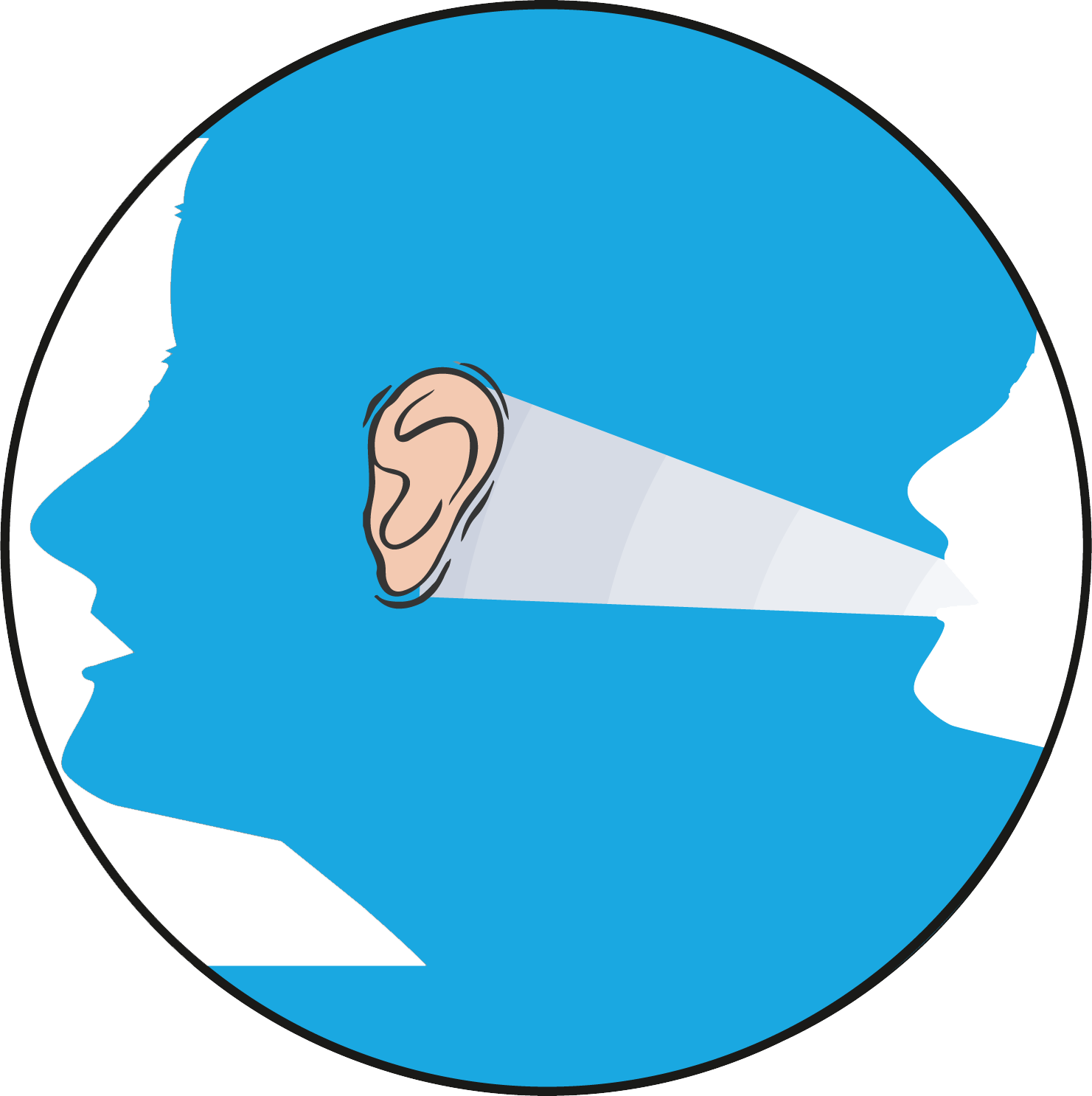
Hearing is one of the fundamental senses in the human body. Whether it’s paying attention to the alarm or facilitating communication, hearing is a significant action in our daily lives. It alerts us from dangers, contributes to meaningful conversations, or helps us respond to any environment. That’s how the normal auditory system works.
The ear plays a significant role in hearing and balance. It is one of the most advanced and sensitive human organs. The ear detects, converts, and transmits the signals to your brain. This is just the fundamental system that we know and read. But did you know that human auditory functioning is quite complex? It depends on various interconnected factors working together to support hearing. Let’s see how the human ear catches sound and processes it to send signals to your brain.
Sound is more like waves traveling the air. The outer ear captures the waves and channels them through the ear canal to the eardrum.
Sound waves hit the eardrum. As a result, it vibrates. These vibrations are sent to the three bones in the middle ear. Collectively, these bones are known as ossicles.
The ossicles intensify the vibrations and then send them to the inner ear or cochlea.
Once the cochlear fluid starts moving, it causes the small hair cells in the inner ear to bend. This action converts the mechanical energy into multiple electrical impulses.
The auditory nerve takes the electrical impulses to the brain. Your brain interprets them as sound.
The Outer Ear
Your outer ear includes a pinna (or auricle) and the ear canal. Pinna has a unique shape with many curves and folds. So, it supports sound collection in the range of 2000-3000 Hz. This range is critical to understanding speech consonants.
The ear canal is more like a narrow passage covered in delicate skin and fine hair. Besides, there are small blood vessels in your ear canal. It also produces ear wax that protects and shields the skin from moisture, bacteria, and dirt. Although earwax is normal, too much buildup can lead to ear blockage and hearing problems.
The Middle Ear
The middle ear begins from the tympanic membrane or ear drum. It is a thin but durable membrane that separates your outer ear from the middle ear. Although the eardrum may have a delicate appearance, it has three layers. These layers support resilience and functionality. There are three interconnected bones behind the eardrum- malleus, incus, and stapes. It amplifies and transmits the sound vibrations to the inner ear from the middle ear.
Another significant structure inside the middle ear is the Eustachian tube. It connects the back of your throat to the middle ear. This tube maintains the air pressure on either side of the eardrum. It normally remains closed, but opens during activities like swallowing, yawning, or chewing. The popping sound you hear, especially when traveling at high altitudes, it’s the Eustachian tube.
The Inner Ear
The inner ear is located inside the temporal bone of the skull. The inner ear has two significant structures- semicircular canals and the cochlea.
- Semicircular canals help with balance and spatial orientation.
- Cochlea aids in hearing. It is a spiral-shaped and fluid-filled structure that looks similar to a snail. It converts the mechanical vibrations from the middle ear into electrical signals using the sensory receptors or hair cells. These bend to respond to the fluid movement generating neural impulses. These electrical signals travel to the brain for processing via auditory nerve.
Cochlea is tonotopically organized just like the piano. It can process various sound frequencies. The human hearing range begins at the lowest pitch of 20 Hz and goes up to 20,000 Hz.